Introduction: What Makes a Work Truly ‘Public Domain’?
There is a particular kind of magic in holding a story that has outlived its author, its first readers, and the world that first gave it breath. When you open a public domain classic, you are not merely reading a book — you are entering a conversation that has continued across generations, unbroken by copyright walls or corporate gatekeepers. But what exactly makes a work “public domain,” and why should that legal status matter to the modern reader, listener, and lifelong learner?
In the simplest terms, a public domain work is one whose intellectual property rights have expired, been waived, or never existed in the first place. In the United States, works published before 1928 — and, following the Music Modernization Act, sound recordings from before 1924 — have entered the public domain, joining a vast global commons of literature, philosophy, and science. This means anyone may freely reproduce, adapt, translate, and distribute these texts without licensing fees or permission. For readers, this is not a technicality; it is a liberation. It means that the greatest works of human imagination belong to everyone, not just to those who can afford a subscription or a hardcover from a premium imprint.
At Sheerenza, we treat the public domain not as a bargain bin of “free stuff,” but as the world’s most extraordinary curated library — a treasury of human wisdom that deserves the same care, design, and editorial attention as any contemporary bestseller. Our philosophy of “The Commute Sanctuary” is built on the conviction that every dead minute in a train car, a treadmill session, or a quiet evening can become an oasis of knowledge. And the public domain, properly curated, is the deepest well we have.
The Cultural Renaissance of Free-Access World Masterpieces
We are living through a quiet but profound cultural renaissance. Over the past two decades, digitization projects have made millions of public domain texts available at the click of a button. Yet the true renaissance is not merely about access — it is about rediscovery. Readers who once associated “classics” with dusty syllabi and impenetrable prose are now encountering them through audiobooks, reflowable ebooks, and beautifully typeset digital editions that meet them where they are.
Consider the numbers: Project Gutenberg alone hosts over 70,000 free ebooks, the vast majority of them public domain. Librivox has recorded thousands of volunteer-read audiobooks. And yet, abundance without curation can become its own form of clutter. The paradox of the free-access era is that too much choice often leads to paralysis. This is where a curated approach becomes essential. A reader who wanders into the public domain without a guide may bounce from a poorly formatted PDF of Moby-Dick to an abridged audio recording of Les Misérables and conclude, wrongly, that the classics are not for them.
The renaissance, then, is not simply about making texts free. It is about making them welcoming. It is about pairing the right edition with the right reader at the right moment — a commuter who needs a 20-minute chapter of The Adventures of Sherlock Holmes, a night-shift worker who wants to drift off to the sonorous cadence of Pride and Prejudice, a student who needs a clean, reflowable text of The Republic that renders perfectly on a phone screen. When curation meets free access, the classics stop being homework and start being companions.
Why Curated Human Editing Matters for 19th and Early 20th-Century Literature
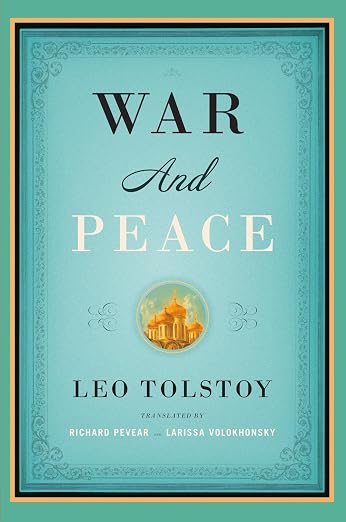
Here is a truth that the “just download it free” crowd rarely acknowledges: public domain does not mean “perfect.” Many of the most widely circulated digital editions of 19th-century novels are riddled with OCR errors, missing chapters, inconsistent punctuation, and archaic formatting that makes reading a chore. A scanned copy of War and Peace from a century-old printing may contain typos introduced by the original typesetter, footnotes that have lost their anchors, and translations that have aged poorly.
This is why human editing — not just automated scraping — matters. At Sheerenza, every public domain title in our catalog is reviewed by human editors who verify textual integrity, correct obvious scanning errors, standardize chapter breaks, and ensure that the reading experience is smooth across devices. For audiobooks, this means selecting narrators whose voices suit the material, checking pronunciation of period-specific terms, and ensuring consistent audio levels. For ebooks, it means reflowable typography that respects the original structure while adapting gracefully to modern screens.
There is also an ethical dimension. Public domain works are not “ownerless” in a cultural sense. They carry the voices of their authors, the assumptions of their eras, and the sensitivities of their first audiences. A responsible curator does not silently “fix” a text to suit modern tastes, nor does it reproduce offensive passages without context. Instead, we present authentic editions with transparent editorial notes where appropriate, allowing readers to encounter the work as it was written while understanding the world that produced it. This is the difference between a careless dump of files and a curated library worthy of your time.
From Frankenstein to War and Peace: Works That Still Define Our Society
Why do certain books refuse to die? Because they are not merely stories — they are blueprints for how we think about ourselves. Mary Shelley’s Frankenstein, published in 1818, is often called the first science fiction novel, but it is far more than that. It is a meditation on creation, responsibility, and the terror of being misunderstood — themes that resonate with startling force in an age of artificial intelligence and genetic engineering. When you listen to Frankenstein on your morning commute, you are not consuming a relic; you are engaging with a living argument about the ethics of innovation.
Leo Tolstoy’s War and Peace, meanwhile, remains the ultimate test of literary endurance — and the ultimate reward. Its sprawling cast, its interweaving of history and fiction, and its profound reflections on free will and historical inevitability make it a book that changes readers at different stages of life. A curated audiobook edition, narrated with care, transforms what many consider an intimidating monolith into a series of intimate human dramas you can absorb chapter by chapter, week by week.
And the list continues: Jane Austen’s Pride and Prejudice, which remains a masterclass in social observation and wit; Charles Dickens’s Great Expectations, a study of class, guilt, and redemption; Fyodor Dostoevsky’s Crime and Punishment, which plumbs the darkest corners of conscience; and Virginia Woolf’s Mrs Dalloway, a novel that reinvented how fiction could capture the flow of time and consciousness. These works define our society not because they are old, but because they keep answering questions we are still asking.
How Digital Audio and Reflowable Ebooks Breathe New Vitality into Historic Texts
The format of a book has always shaped how we read it. The serialized novels of the Victorian era were designed for monthly installments, consumed in bursts by a reading public that devoured them alongside their morning papers. The paperback revolution of the 20th century made literature portable and affordable. Today, digital audio and reflowable ebooks are the next chapter in that evolution — and they are uniquely suited to the rhythms of modern life.
Reflowable ebooks, unlike fixed-layout PDFs, allow text to adapt to any screen size, font preference, or reading environment. This is a technical term with a deeply human benefit: you can read The Picture of Dorian Gray on a phone during a crowded train ride, then continue on a tablet at home, without losing your place or squinting at a poorly scanned page. For 19th-century novels with long paragraphs and dense dialogue, reflowable typography is not a luxury — it is a necessity for comfortable reading.
Audiobooks, meanwhile, turn the commute into a sanctuary. A well-narrated classic can transform a 40-minute drive into a journey through the Russian steppes or the drawing rooms of Regency England. The human voice adds an interpretive layer that silent reading cannot replicate — the pause before a crucial revelation, the subtle shift in tone that signals irony, the warmth that makes a 200-year-old character feel like a friend. At Sheerenza, we believe that these formats are not “lesser” versions of the classics. They are new ways of hearing the same timeless voices.
Our Ethical Curation Promise: Authentic Editions Backed by Transparent Standards
In an era of algorithmic recommendations and infinite scroll, curation is a form of care. At Sheerenza, our ethical curation promise is built on three pillars: authenticity, transparency, and respect for the reader’s time. Every public domain classic in our collection is sourced from verified editions, checked against authoritative references, and presented with clear metadata about its provenance. We do not silently alter texts to fit a trend, nor do we pad our catalog with low-quality scans simply to inflate our numbers.
Transparency means you always know what you are getting. Our product pages clearly indicate whether a title is an unabridged audiobook, a reflowable ebook, or both; who narrates the audio; and what edition the text is based on. We believe that trust is earned through clarity, not marketing hype. This is why we also offer a 30-day hassle-free return policy and 2-day refunds — because we want you to explore the classics without risk. If a narration does not suit you, or an edition does not meet your needs, you should feel free to return it and try another.
Our commitment to free shipping at $0.00 and 1-day digital delivery is part of the same philosophy. We want the distance between your curiosity and your next great read to be as short as possible. Whether you are downloading an ebook at midnight or ordering an audiobook for your morning commute, we believe the experience should be seamless, honest, and respectful of your intelligence.
Conclusion: Building a Lifelong Personal Library Without Subscription Fatigue
There is a quiet exhaustion that comes from living in the subscription economy. Streaming services, software licenses, cloud storage, and content platforms all ask for a monthly fee, and the cumulative effect is a kind of low-grade anxiety — the feeling that you never truly own anything, only rent access to it. Public domain classics offer a different model. When you acquire a curated edition of Jane Eyre or The Count of Monte Cristo from Sheerenza, you are building a personal library that is genuinely yours, free from the fear of a price hike or a licensing dispute.
This is the deeper promise of the public domain: not just free access, but permanent access. A library built on these works is a library that can grow with you for decades — through career changes, relocations, and the shifting seasons of life. It is a library you can pass on to your children, discuss with friends, and return to at different ages, always finding something new in the same familiar pages.
At Sheerenza, we believe that the commute, the workout, and the quiet evening are not dead time to be filled with noise. They are opportunities to build something lasting. We invite you to explore our curated collection of public domain classic audiobooks and ebooks — each one edited with care, delivered within one business day, and backed by our 30-day return promise. Your lifelong library begins with a single, timeless choice. Explore the Sheerenza collection today and discover why the greatest stories ever told are still the ones most worth your time.
Frequently Asked Questions on Public Domain Curation
What exactly does “public domain” mean, and how do I know a book is truly free to use?
A work enters the public domain when its copyright expires, is forfeited, or was never established. In the United States, works published before 1928 are generally in the public domain, along with many government documents and works whose authors explicitly waived their rights. At Sheerenza, we verify the public domain status of every title before adding it to our catalog, and we clearly label each edition so you can trust that you are accessing a legitimate, freely distributable work.
Are free public domain editions as good as paid ones?
Not always. Many free editions are unedited scans with OCR errors, missing pages, or poor formatting. A curated edition, like those at Sheerenza, involves human editing, proofreading, and thoughtful design to ensure a comfortable reading or listening experience. You are not paying for the text itself — you are paying for the care, quality, and convenience that make the text a pleasure to consume.
Why should I choose an audiobook over an ebook for a classic novel?
Audiobooks are ideal for commutes, workouts, and household tasks, turning otherwise passive time into immersive literary engagement. A skilled narrator adds interpretation, pacing, and emotional nuance that can make dense 19th-century prose feel immediate and accessible. Ebooks, meanwhile, are better for close reading, annotation, and reference. Many readers use both formats in tandem — listening on the go and reading at home — and our catalog supports that flexibility.
How does Sheerenza ensure the quality of its public domain audiobooks and ebooks?
Every title is reviewed by human editors who check textual accuracy, correct scanning errors, standardize chapter structure, and verify audio quality. We select narrators whose voices suit the material and ensure consistent production standards. We also provide clear metadata about each edition’s source and format, so you know exactly what you are getting before you buy.
What is your return policy if I am not satisfied with a purchase?
We offer a 30-day hassle-free return policy with 2-day refunds. If an audiobook narration does not suit you, or an ebook edition does not meet your expectations, you can return it within 30 days for a full refund. We want you to explore the classics with confidence, knowing that your satisfaction is our priority.
How quickly will I receive my digital purchase?
Digital delivery is guaranteed within one business day, and most orders are fulfilled instantly. Shipping is always $0.00, because we believe that access to great literature should never be burdened by hidden fees. Your next classic is never more than a click away.

Add comment