Long before neon-soaked megacities and galaxy-spanning empires colonized our imaginations, a generation of visionary writers was quietly laying the foundation for everything we now call science fiction. These were the dreamers of the late nineteenth and early twentieth centuries—authors who looked at steam engines, telegraph wires, and the first tentative flying machines and dared to extrapolate entire futures from them. Their work forms the bedrock of what collectors and scholars now lovingly call golden age science fiction classics, a body of literature that anticipated interplanetary warfare, cosmic horror, and the optimistic technological dreams of mid-century America. At Sheerenza, we believe these pioneering voices deserve more than a dusty shelf; they deserve to be heard, restored, and carried with you into the modern world.
The Forgotten Pioneers of Speculative Imagination
When we think of early science fiction, our minds often leap straight to H.G. Wells and Jules Verne—and rightly so, for they are the titans on whose shoulders the genre stands. Yet the landscape of golden age science fiction classics is far richer and stranger than the standard canon suggests. Between the 1890s and the 1950s, a sprawling ecosystem of newspaper serials, dime novels, pulp magazines, and juvenile adventure books produced a dazzling array of speculative visions. Many of these works have slipped into the public domain, their authors largely forgotten, their ideas nonetheless woven into the DNA of every space opera and cyberpunk dystopia that followed.
What makes these forgotten pioneers so compelling is their unbridled sense of possibility. They wrote before genre conventions hardened into formula, before “hard sci-fi” and “space fantasy” became marketing categories. A single novel might blend astronomy, naval adventure, spiritualism, and social commentary without apology. This fluidity gives vintage speculative fiction a peculiar freshness—an experimental energy that modern readers, accustomed to tightly branded subgenres, often find unexpectedly thrilling. Reading these works is less like visiting a museum and more like eavesdropping on the birth of an entire way of thinking about the future.
There is also a psychological dimension to why these early visions resonate so deeply. They emerged from moments of genuine historical vertigo—the rapid industrialization of the Victorian era, the global shock of the First World War, the atomic anxieties of the Cold War. When we read them today, we recognize our own unease about artificial intelligence, climate change, and technological acceleration reflected back at us through a century-old lens. The fears and hopes are different in their specifics, but identical in their shape. This is the quiet power of golden age science fiction classics: they teach us that wondering about the future is one of the oldest and most human things we do.
Edison’s Conquest of Mars and the Roots of Interplanetary War Fiction
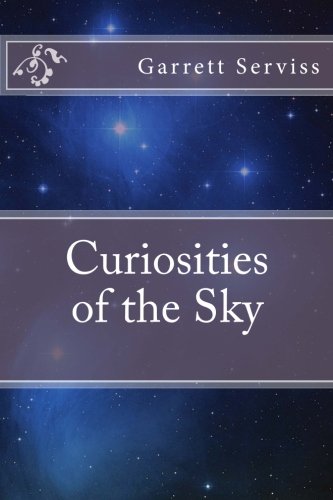
Few works better illustrate the wild ambition of early speculative fiction than Garrett P. Serviss’s Edison’s Conquest of Mars, serialized in 1898 as a direct sequel to H.G. Wells’s The War of the Worlds. Where Wells ended with humanity barely surviving a Martian invasion, Serviss imagined something far more audacious: a retaliatory human expedition to Mars itself, led by none other than Thomas Edison, the era’s most celebrated inventor. The novel is a glorious collision of real scientific celebrity and unrestrained imagination, featuring disintegrator rays, electric spaceships, and a grand interplanetary campaign that predates the military science fiction of the twentieth century by decades.
What makes Edison’s Conquest of Mars so historically significant is its role in establishing the template for interplanetary war fiction. Serviss understood that the public’s fascination with Edison was not merely admiration but a kind of faith—a belief that American ingenuity could conquer any frontier, terrestrial or otherwise. By placing a living inventor at the helm of a cosmic armada, he fused the era’s technological optimism with the emerging genre of space adventure. The result is a work that feels at once naive and prophetic, anticipating everything from the pulp space operas of the 1930s to the militarized science fiction blockbusters of our own century.
For modern readers, the novel offers a fascinating window into how the late Victorian imagination processed the idea of extraterrestrial conflict. The Martians are not merely monsters; they are a mirror for imperial anxieties, a projection of terrestrial rivalries onto the cosmic stage. Serviss’s prose crackles with the breathless enthusiasm of an age that genuinely believed the solar system was within reach. Encountering it today, especially in a carefully restored edition, is to feel the raw, unpolished energy of a genre discovering its own possibilities for the first time.
William Hope Hodgson and the Haunting Depths of Sea-Born Cosmic Dread
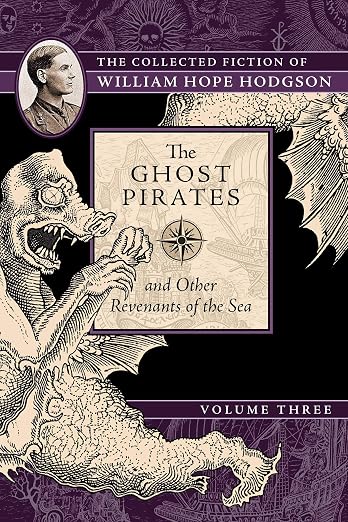
If Serviss represents the sunny, can-do optimism of early science fiction, William Hope Hodgson represents its shadow. A sailor-turned-writer who drowned tragically young in the trenches of World War I, Hodgson produced a body of weird fiction that fused maritime adventure with cosmic horror in ways that still feel startlingly modern. His novel The Night Land, published in 1912, imagines a far-future Earth where the sun has died and the last remnants of humanity huddle within a vast pyramid, besieged by incomprehensible entities. It is a work of staggering imaginative reach—dense, strange, and profoundly unsettling—that anticipates the cosmic dread later perfected by H.P. Lovecraft, who openly acknowledged his debt to Hodgson.
Hodgson’s sea-born cosmic horror, particularly in stories like “The Voice in the Night” and The Boats of the ‘Glen Carrig’, transforms the ocean into a liminal space where the known world dissolves into something vast, ancient, and indifferent. This is science fiction before the term existed, blending biology, geology, and metaphysics into narratives that refuse easy categorization. His influence ripples through twentieth-century horror and speculative fiction alike, from Lovecraft’s tentacled gods to the existential dread of contemporary cosmic horror. Reading Hodgson is to confront the terrifying possibility that the universe is not merely indifferent to humanity, but actively, incomprehensibly hostile.
There is a peculiar intimacy to Hodgson’s terrors that makes them especially powerful in audio form. His narrators are often solitary figures—sailors, explorers, survivors—whose voices carry the weight of what they have witnessed. To hear such testimony performed aloud is to be drawn into the same claustrophobic dread that grips his characters. For listeners seeking golden age science fiction classics with genuine psychological depth, Hodgson’s work offers a haunting and unforgettable entry point into the darker currents of early speculative imagination.
Tom Corbett, Space Cadet: The Optimistic Technological Visions of Mid-Century America
By the 1950s, science fiction had become a mainstream cultural force in America, and few properties embodied its optimistic spirit more completely than Tom Corbett, Space Cadet. Originating as a television series, radio drama, comic strip, and series of juvenile novels, Tom Corbett followed the adventures of a young cadet at the Space Academy as he trained to become an officer of the Solar Guard. The franchise was unapologetically didactic, promoting teamwork, scientific literacy, and faith in American institutions—yet it also painted a genuinely inspiring picture of a future in which humanity had spread peacefully across the solar system, guided by reason and cooperation.
The Tom Corbett novels, written by a rotating stable of authors under the house name Carey Rockwell, are fascinating artifacts of mid-century technological optimism. They imagine atomic-powered rockets, space stations, and interplanetary colonies with a confidence that now feels both charming and poignant. This was the era of the space race’s earliest stirrings, when the promise of American engineering seemed limitless and the future was something to be built rather than feared. The books functioned as both entertainment and informal education, introducing young readers to the principles of orbital mechanics and rocketry long before such knowledge was commonplace.
For contemporary readers, Tom Corbett offers something increasingly rare: a vision of the future that is fundamentally hopeful. In an age saturated with dystopian narratives, there is genuine refreshment in encountering a story where technology serves human flourishing and where young people are trusted with responsibility and adventure. These are quintessential golden age science fiction classics, and they remind us that the genre’s capacity for wonder was once inseparable from its faith in progress. Rediscovering them is not mere nostalgia; it is an invitation to recover a mode of imagining the future that we have, perhaps, too hastily abandoned.
Why Vintage Sci-Fi Hits Different in High-Definition Audiobook Format
There is a reason that vintage speculative fiction resonates so powerfully when experienced as audio. The prose of the early twentieth century was written to be read aloud—in serialized newspaper installments, on radio broadcasts, around family hearths. Its rhythms are more deliberate, its descriptions more ornate, its narrative voices more present than much of what we read today. When a skilled narrator brings these texts to life, the listener encounters not just a story but an entire vanished sensibility: the cadence of a century ago, the earnestness of an era that believed in heroes and frontiers and the perfectibility of human endeavor.
Audio also solves a practical problem for modern readers. These works are often dense, digressive, and stylistically unfamiliar to contemporary eyes. A reader encountering Hodgson’s labyrinthine sentences or Serviss’s breathless exposition on the printed page may find themselves rereading passages, losing momentum, setting the book aside. A gifted narrator, however, carries the listener through difficult terrain with interpretive skill, clarifying archaic vocabulary through tone and context, sustaining momentum across long descriptive passages. The result is that challenging classics become genuinely accessible—not diluted, but illuminated.
This is where Sheerenza’s philosophy of “The Commute Sanctuary” becomes especially meaningful. We believe that the daily commute, the morning workout, the quiet evening walk—these are not dead time to be endured but opportunities to be reclaimed. Imagine transforming forty minutes of traffic into an expedition to Mars alongside Edison, or a gym session into a descent into Hodgson’s nightmarish far future. Our curated audiobooks are selected precisely to make this transformation effortless, delivering golden age science fiction classics in formats that fit seamlessly into modern life while honoring the integrity of the original texts.
Ethical Digital Preservation: Handcrafting Restored Audio for Collectors
Not all digital editions are created equal, and the difference matters enormously when dealing with century-old texts. Many public domain works circulate online in carelessly scanned, error-riddled versions—OCR artifacts, missing pages, garbled punctuation, and anonymous narrations that flatten the author’s voice into monotone. At Sheerenza, we take a different approach. Every title in our collection is verified Public Domain, then carefully curated and restored with the same attention a fine-press publisher would give to a limited edition. We believe that preservation is not merely a technical process but an ethical commitment to the authors and readers who came before us.
Our restoration process involves multiple layers of care. Texts are checked against authoritative editions to correct transcription errors and restore passages lost to careless digitization. Narration is entrusted to voices capable of capturing the period’s cadence without descending into parody. Audio is mastered for clarity across the full range of listening environments, from noisy commutes to quiet living rooms. The goal is not to modernize these works but to remove the accumulated noise of a century so that the original voice can be heard as clearly as possible. Collectors and scholars have long understood that a well-made edition is a form of stewardship; we extend that principle into the digital realm.
This commitment also shapes our service guarantees, which we designed to remove every possible barrier between you and these treasures. Every order ships with $0.00 free shipping and is delivered digitally within one business day, so there is no waiting and no shipping cost to consider. If a title does not meet your expectations, our 30-day hassle-free returns and 2-day refunds ensure that your exploration carries no risk. We want discovering golden age science fiction classics to feel as effortless and rewarding as the finest browsing experience in a physical bookshop—because that is precisely what we are building, one restored title at a time.
Conclusion: Rediscovering the Wonder Years of Futurism
The five masterpieces we have explored—Serviss’s interplanetary armada, Hodgson’s cosmic depths, the optimistic cadets of the Solar Guard, and the broader constellation of early speculative visionaries—share a common quality that modern science fiction sometimes loses: unguarded wonder. These writers were not yet self-conscious about their genre. They did not write to satisfy market categories or to signal sophistication. They wrote because the future seemed genuinely astonishing, and they wanted to share that astonishment with anyone who would listen. That generosity of spirit is what makes golden age science fiction classics endure.
Rediscovering these works is not an exercise in nostalgia. It is an act of reconnection with the imaginative roots of our technological age. Every self-driving car, every mission to Mars, every debate about artificial intelligence was, in some form, anticipated by writers who looked at the world around them and dared to ask, “What if?” Their answers were sometimes wrong, often strange, and always illuminating. To read them is to understand not only where our visions of the future came from, but also why we continue to need such visions—to orient ourselves, to inspire our children, and to remind ourselves that the future is not something that happens to us but something we imagine into being.
At Sheerenza, we are honored to serve as companions on this journey of rediscovery. Whether you are a seasoned collector seeking definitive editions or a curious newcomer encountering these pioneers for the first time, our curated collection of restored audiobooks and reflowable ebooks is designed to meet you wherever you are—on the train, at the gym, or in the quiet hours of a Sunday evening. We invite you to explore our full catalog and begin your own expedition into the wonder years of futurism. Visit our shop today and let your next commute become a passage through time.
Frequently Asked Questions About Classic Sci-Fi Editions
What exactly are “golden age science fiction classics”?
The term generally refers to speculative fiction written roughly between the 1890s and the 1950s—a period spanning the late Victorian scientific romances, the pulp magazine era, and the optimistic juvenile adventures of the early Cold War. These works established many of the genre’s foundational tropes, from interplanetary warfare to cosmic horror, and remain in the public domain, making them ideal candidates for careful digital restoration and modern audio production.
Are these audiobooks truly unabridged?
Yes. Every audiobook in our collection is produced from complete, verified texts, with no abridgment, condensation, or editorial rewriting. We believe that vintage prose deserves to be heard in full, including its digressions, its period vocabulary, and its distinctive narrative rhythms. Our restoration process corrects transcription errors but never alters the author’s original words.
How quickly will I receive my purchase?
Digital delivery is guaranteed within one business day of your order. Because our titles are delivered electronically, there is no shipping cost—ever. We maintain $0.00 free shipping across the entire catalog, and your files will be ready to download and enjoy almost immediately, whether you are preparing for tomorrow’s commute or settling in for a long weekend of listening.
What if a title isn’t right for me?
We offer a 30-day hassle-free return policy on all purchases, with refunds processed within two business days. Exploring vintage science fiction involves encountering unfamiliar styles and sensibilities, and we want that exploration to be entirely risk-free. If a restored edition does not meet your expectations, simply let us know and we will make it right promptly.
How do you ensure the quality of your restorations?
Each title is verified as Public Domain, checked against authoritative print editions, and carefully proofread to eliminate scanning errors and OCR artifacts. Narration is matched to the tone and period of each work, and audio is mastered for clarity across listening environments. We treat every restoration as a collector’s edition, because we believe digital preservation should meet the same standards as fine physical publishing.
Can I listen on any device?
Absolutely. Our audiobooks are delivered in standard high-quality formats compatible with smartphones, tablets, computers, and dedicated audio players. Ebooks are provided as reflowable files that adapt to any screen size, so you can switch seamlessly between listening during your commute and reading during a quiet evening—turning every spare moment into an oasis of discovery.

Add comment